Component Geometry and Variation for Bearing Presentation for Automated Assembly: Component sample trial
Prepare bearing samples with dimensions, face features, permitted contact areas and supplied condition. Define orientation and accepted delivery for the trial.
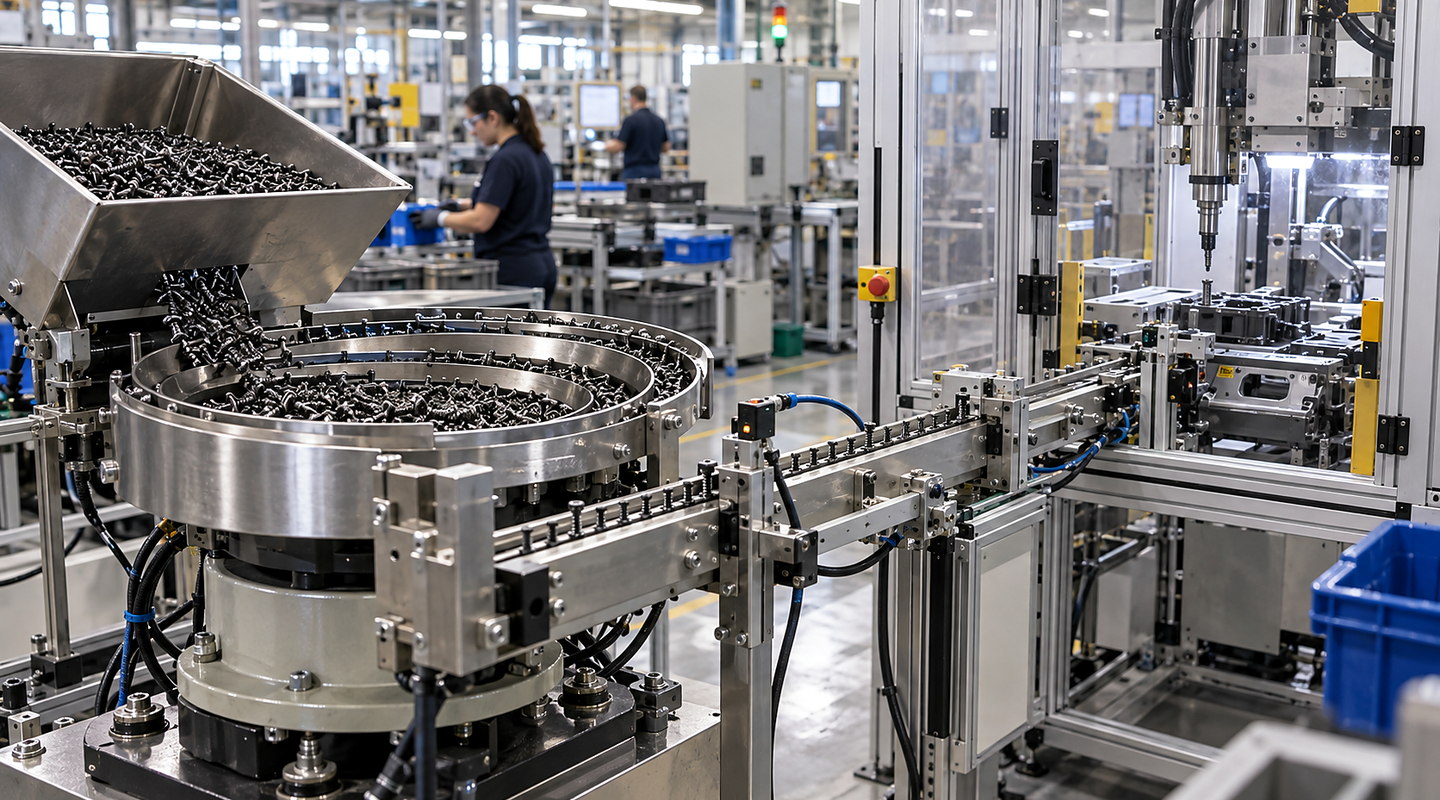
Illustrative component-feeding scene.
In brief
Record the bore, outside diameter, width and mass for every bearing variant, then show the seals, shields, flanges or other features that identify each face. Supply representative parts in their normal lubricated or packaged condition. Define which surfaces may be contacted and the orientation needed at the assembly position before comparing feeding methods.
For bulk presentation using bearing presentation for automated assembly, describe the realistic range and how changes in component geometry and variation for bearing presentation for automated assembly affect the result you need.
On the production floor
Turn your production information into clearer decisions — Bearing Feeding Systems
Plan bearing feeding systems around real component variation, bulk condition, orientation, usable delivery rate and the downstream interface. Discuss representative part trials with Sorting Solutions. Use this guide to resolve component geometry and variation for bearing presentation for automated assembly before it limits the final system.
Component Geometry and Variation for Bearing Presentation for Automated Assembly: condition, range and effect on your process
Current condition
Describe how you observe or measure component geometry and variation for bearing presentation for automated assembly in your operation, including sample condition and any measuring limits. For a project focused on bearing presentation for automated assembly, also record the production state in which each observation was made.
Realistic range
For Bearing Feeding Systems, include normal production conditions, credible extremes, product or part variants and changes over time.
Effect on the system
Show which settings, safeguards, maintenance tasks, decisions or required outcomes are affected by changes in component geometry and variation for bearing presentation for automated assembly.
Before you contact us
Five questions about component geometry and variation for bearing presentation for automated assembly for your application
Who can confirm this information?Identify the person responsible for component geometry and variation for bearing presentation for automated assembly in production, quality, engineering or operations.
How representative is the sample?Include age, supplier, batch, environment and upstream process state where they affect bearing feeding systems.
What is the difficult condition?Include the slow, reflective, flexible, dirty, damaged, marginal or uncommon case that your system must still handle.
How will you judge the result?Agree the method, repetitions, acceptable range, result record and the response if the observed result falls outside the agreed range.
What else must be coordinated?Your final bearing feeding systems scope must also account for escapement and downstream pick interface, jam, damage and recovery acceptance checks, current regulations and the conditions at your site.
Connected details
Six items to include in a bearing sample brief
Question 1
Dimensions and variant identity
Record bore, outside diameter, width and mass for every bearing variant, with drawings and bearing references. Identify similar-looking variants and define how the wrong part will be kept from the assembly station.
Question 2
Faces and required orientation
Show seals, shields, flanges or other features that distinguish the faces. State whether either face may lead or a particular face must lead, and include a dimensioned sketch of the required hand-off.
Question 3
Permitted contact areas
Identify surfaces that must remain unmarked and seals or shields that must not carry handling loads. Agree how to inspect the bearing after repeated circulation and transfer. Include these limits in the surface and handling review.
Question 4
Supplied condition
Show whether bearings arrive loose, stacked, in trays or individually protected. Include lubricant, residues and packaging debris in representative trials. Compare retained tray presentation with bulk handling using the selection guide.
Question 5
Assembly handover
Specify the receiving datum and support so the bearing keeps its required pose during transfer. Agree the call, ready and occupied states and the single-part release with the assembly machine, using the integration guide.
Question 6
Trial records and limits
Include normal, marginal and supplier-variant samples. Record accepted delivery, incorrect orientation, visible damage and recovery actions separately, including replenishment and downstream stops. Use these observations to agree the limits for the complete route.